
Research Partnership

Research Partnership
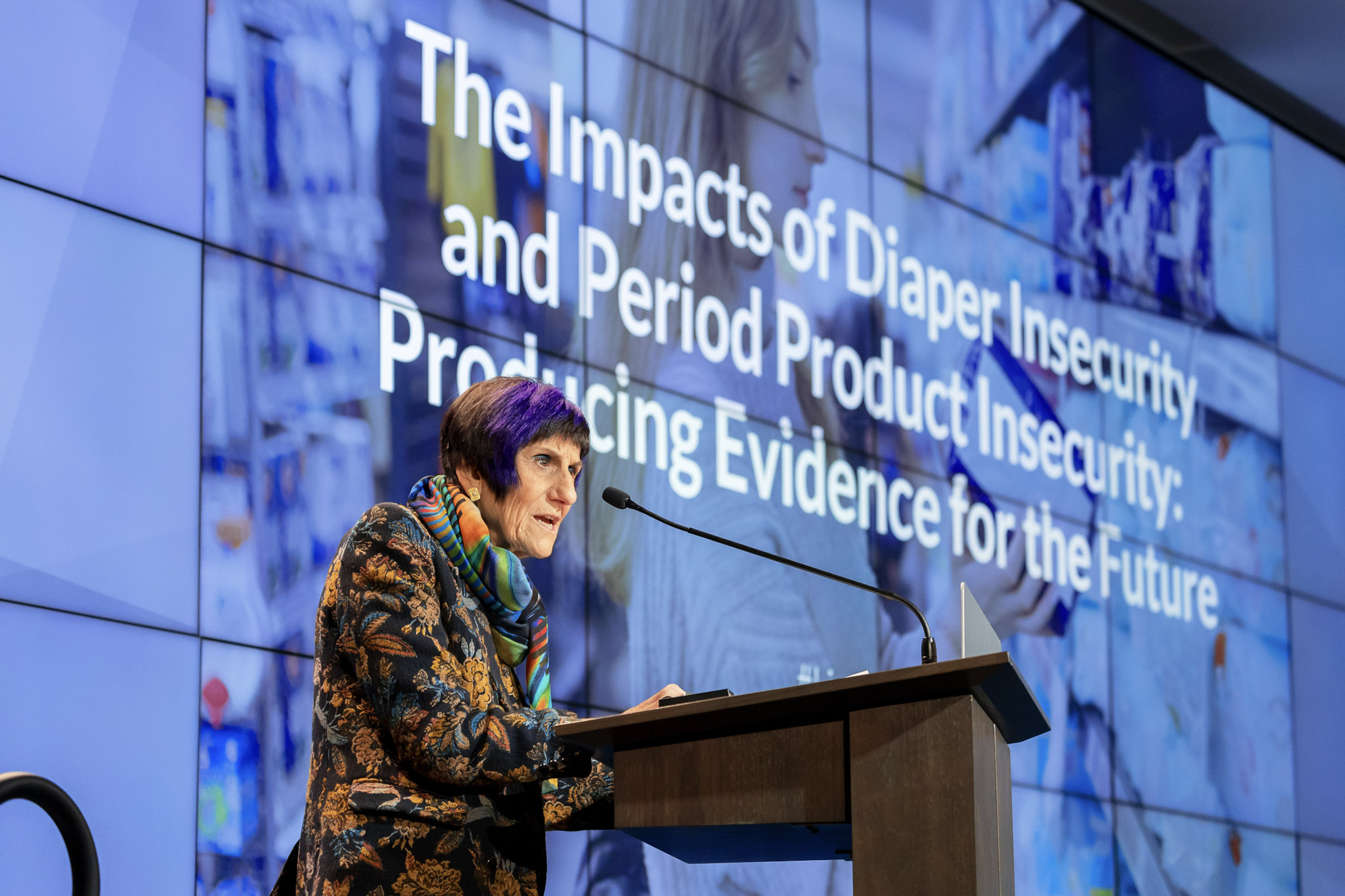
Photo Credit: Abram Landes for the Urban Institute.
About the Partnership
The National Diaper Bank Network (NDBN) is engaged in a five-year research collaboration with the Urban Institute, a trusted source for changemakers seeking to create a world where everyone has the opportunity and power to thrive. The project launched in August 2024.
In years 1 and 2, the research team is planning and implementing a research agenda that leverages existing survey data, including The Diaper Check 2023 and 2024— nationally representative studies commissioned by NDBN in partnership with YouGov—and NDBN’s Annual Member Survey of more than 300 basic needs banks across the country. The research employs Urban’s analytic tools, including microsimulation models and the Spatial Equity Data Tool, to produce evidence on the following:
- The prevalence and impacts of diaper insecurity, period poverty, and the use and reach of basic needs banks;
- Geographic equities in access to basic needs banks; and,
- Simulations on the health, social, and economic impacts of reductions in diaper insecurity and menstrual product insecurity.
In years 3 through 5, the research team will plan and execute one or more impact studies that examine the added value of distributing diaper supplies to families with young children who are participating in economic mobility interventions.
Diaper Insecurity Dashboard
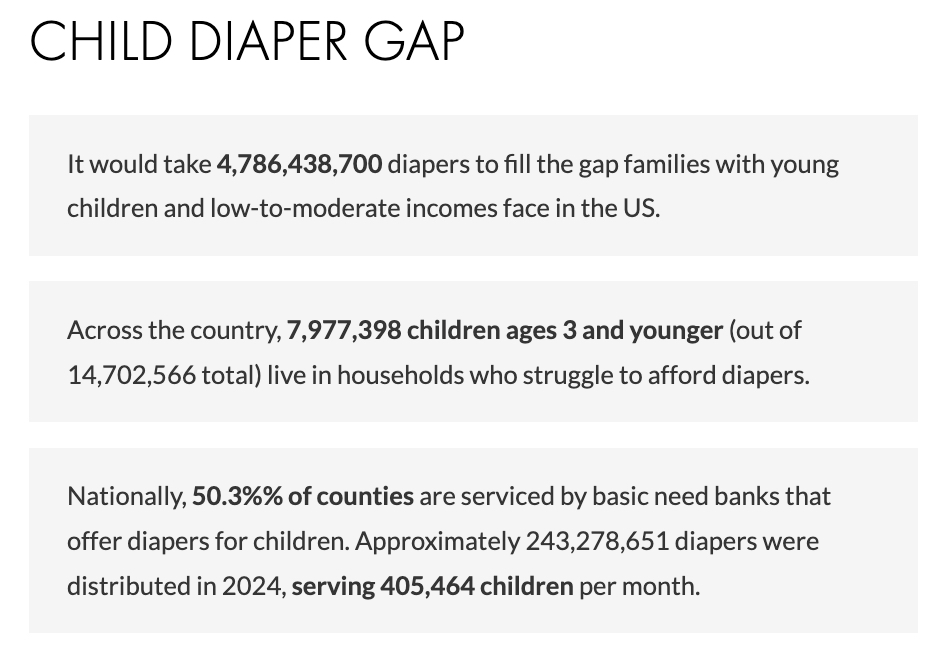
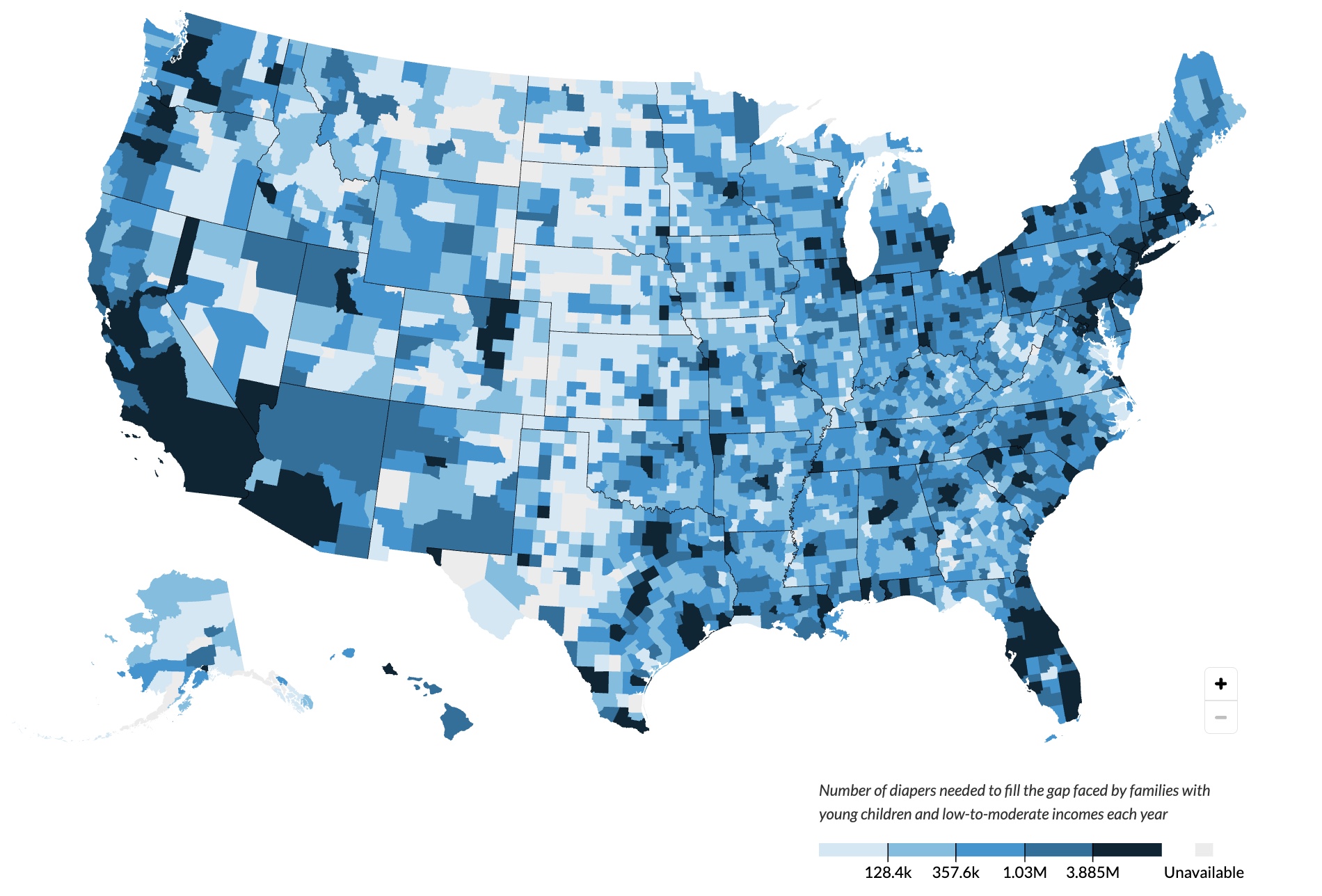
The National Diaper Bank Network and Urban Institute debuted the Diaper Insecurity Dashboard during a Congressional Briefing on Capitol Hill, September 9, 2025. The dashboard is the first-ever data tool offering in-depth, state-by-state, county-by-county analysis of diaper insecurity across the U.S.
The Diaper Need Dashboard delivers critical data that enables lawmakers, agencies, and advocates to develop evidence-based policies and implement solutions that address diaper insecurity. The full dashboard is available here or by clicking on the map below.
For questions about the Diaper Insecurity Dashboard and/or NDBN-recommended policies to end diaper insecurity, please contact [email protected].
Mapping Diaper Insecurity in the US
NDBN Recommended Policy Opportunities
State Policy Opportunities:
State Funding for Diaper Banks
States may decide to support diaper banks or other organizations by investing state funding to expand diaper distribution programs
Diaper Tax
As of October 7, 2025, 23 states currently impose sales tax on diapers. This diaper tax ranges from a low of 4% to a high of 7% in Mississippi and Tennessee. In addition, many cities and counties impose an additional sales tax on diapers.
Medicaid Coverage of Diapers
Some states provide Medicaid coverage of diapers to individuals with qualifying medical conditions and who are beyond the age of typical diapering years. Such policies vary by state. In addition, efforts are being made to cover diapers under Medicaid for children during diapering years as a way to reduce instances of adverse medical conditions, such as urinary tract infections and diaper dermatitis, that come from not changing soiled diapers for long periods of time, often due to diaper need.
State Policy Opportunities:
State Funding for Diaper Banks
States may decide to support diaper banks or other organizations by investing state funding to expand diaper distribution programs
Diaper Tax
As of July 1, 2025, 24 states currently impose sales tax on diapers. This diaper tax ranges from a low of 4% to a high of 7% in Mississippi and Tennessee. In addition, many cities and counties impose an additional sales tax on diapers.
Medicaid Coverage of Diapers
Some states provide Medicaid coverage of diapers, to individuals with qualifying medical conditions and who are beyond the age of typical diapering years. Such policies vary by state. In addition, efforts are being made to cover diapers under Medicaid for children during diapering years as a way to reduce instances of adverse medical conditions, such as urinary tract infections and diaper dermatitis, that come from not changing soiled diapers for long periods of time, often due to diaper need.
Federal Policy Opportunities:
Direct Funding for Diaper Banks
Federal funding is necessary to directly support diaper banks as trusted community sources that are experts in the storage, warehousing and distribution of products. Direct funding additionally increases the likelihood of sustainability and enables diaper banks to meet the growing needs in their communities.
Diapers & Medicaid
Diaper coverage under Medicaid for children under 4 is an opportunity to reduce unnecessary emergency room visits, acute infections and child and maternal health complications.
Diapers & Maternal, Infant, and Early Childhood Home Visiting (MIECHV)
Funding was allocated for a short time period in 2021 to allow MIECHV to provide emergency diapers, wipes and rash cream and coordinate with diaper banks when practical. Future policy should require MIECHV to contract with, and reimburse, diaper banks for providing diapers to families on an ongoing basis.
Diapers & Temporary Assistance for Needy Families (TANF)
TANF funds can be utilized either directly to support the provision of diapers through diaper banks to TANF-eligible families or TANF recipients, or through the provision of stipends or vouchers to allow TANF-eligible or TANF recipients to purchase diapers directly.
Diapers & Child Welfare
There is a strong opportunity to prioritize prevention services that provide families with concrete supports like diapers through changes to Family First that require states to include the provision of diapers in their Family First prevention plans.
Federal Policy Opportunities:
Direct Funding for Diaper Banks
Federal funding is necessary to directly support diaper banks as trusted community sources that are experts in the storage, warehousing and distribution of products. Direct funding additionally increases the likelihood of sustainability and enables diaper banks to meet the growing needs in their communities.
Diapers & Medicaid
Diaper coverage under Medicaid for children under 4 is an opportunity to reduce unnecessary emergency room visits, acute infections and child and maternal health complications.
Diapers & Maternal, Infant, and Early Childhood Home Visiting (MIECHV)
Funding was allocated for a short time period in 2021 to allow MIECHV to provide emergency diapers, wipes and rash cream and coordinate with diaper banks when practical. Future policy should require MIECHV to contract with, and reimburse, diaper banks for providing diapers to families on an ongoing basis.
Diapers & Temporary Assistance for Needy Families (TANF)
TANF funds can be utilized either directly to support the provision of diapers through diaper banks to TANF-eligible families or TANF recipients, or through the provision of stipends or vouchers to allow TANF-eligible or TANF recipients to purchase diapers directly.
Diapers & Child Welfare
There is a strong opportunity to prioritize prevention services that provide families with concrete supports like diapers through changes to Family First that require states to include the provision of diapers in their Family First prevention plans.
We’re Here to Help.
If you have questions and/or want to discuss policy options to help end diaper insecurity, NDBN can help. To schedule a meeting, please contact:
Lacey Gero, Director of Government Relations